Hip Surgery
Visit orthopedics.healthanimations.com for FREE videos, illustrations and patient handouts for healthcare providers. This 3D medical animation depicts total hip replacement surgery of the left hip. The procedure includes the incision, exposure of the hip joint, placement of the acetabular hip prosthetic component (socket), removal of the arthritic femoral head, and placement of the femoral head prosthesis (ball). ANCE00188
Video Rating: 4 / 5
Anterior Hip Replacement Surgery
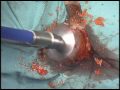
Hip replacement

Image by jilly andi
Hip Replacement?
you know, there is a great discussion forum on Delphiforums.com where people who have had hip and knee replacements are discussing what they are going through and what works or hasn't worked for them, all kinds of things that are helpful to know for someone who is going to have the surgery. Like, what to expect and how long things will take. All ages are participating there, young and old. Here is the link:
http://forums.delphiforums.com/onourfeet/start
Another interesting thing I found recently is Virtual Hip Surgery:
http://www.edheads.org/activities/hip/swf/index.htmMy wife had hip replacement 2 months ago she is now on top of the world.She had suffered daily pain for years,towards the end just before the op she was suffering dreadfully even though she was on one of the strongest painkillers.
It seems to take two to three months to recover from the op as the scar tissue has to heal properly so that the muscle can rebuild.
Because hip replacement is now an everyday op people dont seem to think that it is a big one but the op itself is a big one. It described by the medical proffession as major surgery.
My wife had to be nursed by myself constantly,even little things we take for granted like putting on socks and tying shoe laces was impossible for her just after the op.This phase lasted about four weeks then slowly but surely she was healing and starting to do things for herself again.So please be prepared for a lot of extra work for a while.All I can say is the six weeks or so of the constant nursing was a bit of a strain on both of us but it was well worth it to see my wife come back to her normal self and free from pain and smiling again.
We heard a lot of the bad stories you will be hearing before my wife had the op. I think the bad stories come about because bare in mind people with arthritis are in awful pain and their mobility is very much restricted so I feel that they are not in the best frame of mind.We have since met up with two people who had the op the same day as my wife..when they were in hospital they were complaining all the time....but two months down the line and they are saying "it was the best thing they have ever done".
So yes for two to three months there will be discomfort but at the end of the day it is all worthwhile.My mom has had both hips replaced. She is doing well and gets around much better now. It's important to do all the physical therapy afterward so that the range of movement will be normal.As a physical therapist, I have seen many patients with hip replacements. Either they had them in the past and I was seeing them for a different reason, or that was the primary reason I was seeing them.
Of all the joint replacement surgeries, I feel that the hip is the least painful, quickest and easiest to recover from. The strength and mobility come back much quicker as opposed to the knee or shoulder. They rarely need to come to outpatient therapy as they often do well with just a few weeks of home therapy.
Our facility had a surgeon who performs the minimally invasive procedure which usually allows the patient to go home the next day. Otherwise, patients traditonally spend 4 days in the hospital and then return home or go to a rehab facility (especially if they live alone or have no family support). The most difficult thing after surgery is to learn how to function within the "hip precautions" which include no inward rotation of the leg, no crossing of the legs, and no flexing of the hip past 90 degrees. This is provided the surgeon performs the traditonal posterlateral apporach. These restrictions are usually in place for 3 months, but may vary by surgeon.
Post surgically, the patient is usually allowed full weight bearing, although use of a walker or cruches is normal. PT and OT are needed to learn how to function within the precautions, such as how to stand up, put shoes on the feet, etc.
This is a highly successful surgery...I can only think of two in the past six years (that I treated) that went bad...one due to infection (although she was already chronically ill) and one chronically dislocated (because she never followed her precautions). The technology continues to advance and many are lasting beyond the 15 years they were estimated.
If I had to pick a joint to be replaced, the hip and knee would be at the top of my list.The cost of hip joint replacement surgery is very low in India as compared to USA,UK and Canada. You can get the surgery done there in a fraction of cost of what would you pay in USA or private UK
There is one company that is very famous in India that arranges orthopaedic surgery for foreigners in India.They are called the Forerunners Healthcare.I read a lot about them in the Newspapers and about their patient stories.
I have also read that they arrange financing for american and canadian patients as all surgery is not covered by insurance or by NHS in the UK.They also have photos pasted of their International patients.You can checkout their website.The cost savings are incredible.As a doctor i personally believe that your knee joint replacement surgery can be easily handled in India as the quality of healthcare available here is simply best in the world.The surgeons are USA/UK trained and facilities are 5 star.
My cousin also got her hip replacement surgery for in India through the forerunners healthcare .She is more than very happy with the results.She is totally pain free now.She just paid 25% of the amount she was quoted in USA and is all praise for this forerunners healthcare company. hope this helps.
http://www.forerunnershealthcare.comI had both of my hips replaced in separate surgeries several months apart. That was 4 years ago. I don't know what you have heard that is "bad" about this surgery. Since it is performed only on people who have basically lost all the cartilage in their joint and have lost a lot of their quality of life, I find it difficult to see a downside to this surgery. It is one of the most successful surgeries performed today in terms of how it relieves pain and restores function. It is truly a miracle surgery and I am living (and walking!) proof.
That said, it still is major surgery with all the risks that might go along with such a procedure. However in reasonably healthy people who can safely undergo the procedure (the doctor will do a pre-op physical) and who can cooperate in their post-op rehabilitation, it is a safe procedure. Rehabilitation can take time and can be hard work. Regular exercising and adhering to post-op movement restrictions is essential to avoid complications.
The surgeon will tell the patient about the possible complications and what he will do and what the patient can do to avoid them. It is encouraging to observe that this surgery has almost become routine in hospitals. When I had mine, they had a notebook prepared for the patient that went through everything that would happen each day of the stay.
Choosing a surgeon and a hospital is important. The more they do, the better the chances of a good outcome. Pick a surgeon who does a lot of hips. A recent US News & World Report Article (July 17, pp. 72+ "Good help, close to home") includes a chart with benchmark recommendations for minimum number of surgical procedures that correlate with a high level of success. The benchmark for hip replacements is 100 for a hospital, and 50 for the surgeon.
With my 2 THRs, I spent about a year preparing to have the surgeries, and recovering. I spent 5 days in the hospital each time. I had one complication which required one radiation treatment. It took place on the 3rd hospital day. The reason I had the radiation treatment was that the surgeon thought that I was at risk for heterotopic ossification (bone growing in soft tissue where it's not supposed to be). One radiation treatment pretty much eliminates that possibility. It didn't hurt but it was uncomfortable having to lie still on a hard surface long enough for them to do their thing. I had home health nurse and PT visits for two weeks after I got home. The nurse removed my staples. About 4 weeks post-op, I began outpatient physical therapy which continued for about 8 weeks, 2-3 times a week. I was able to drive at 4-5 weeks for each hip. I did home exercises 3 times a day for the duration including the 5 months between surgeries. I had swelling of my thigh and ankle during the first THR, no swelling at all after the 2nd. I took blood thinning meds after each (it was Coumadin). I also wore TED socks for several weeks each time. I was restricted from bending at the hip past 90 degrees and was given an assortment of tools that helped me function without bending too much. I used both a walker and forearm crutches interchangeably during the first month or so, gradually weaning myself to a single crutch, then a cane, then nothing. I was able to fix my own (simple) meals after the first week and actually was taught how to do this at the occupational therapy center at the hospital.
Now, several years later, no one would be able to tell that I have two THRs. I have no pain, no limp, can walk miles, do gardening. I avoid high-impact activities but since I was in such bad shape for years before surgery I don't miss it.
I'd like to make this a balanced answer to your question and cite some bad things that could (but probably won't) happen. I guess the worst that could happen would be that for some reason the joint was not inserted properly or the surgery was botched in some way or the joint became infected so that a revision procedure would have to be done. Or - the patient, despite anticoagulation therapy (such as the Coumadin I took) developed deep-vein thrombosis (DVT) that turned into a pulmonary embolism and the patient died. Or the patient developed hospital infection (MRSA), a risk in any surgery, not just THR, and died.
Anyhow, the bottom line for me is that I would be wheel-chair-bound today had I not had the surgery. And I am way too young for that! Good luck to your grandparent.I had hip replacement 2 years ago at the age of 38. I listened to a lot of people before the procedure and it scared me half to death...Bottom line is that every patient is different and will have a different experience. My advice for your relative is to listen closely to their orthopedic and to feel absolutely comfortable with him (or her). Make sure somebody else goes with your relative to the office visits before the surgery to ask questions that might not have been covered.Best of luck....
Orignal From: Hip Surgery

No comments:
Post a Comment